
From Sugarcane to Wheat Straw: How Alternative Materials are Reshaping the Future of Beauty Packaging
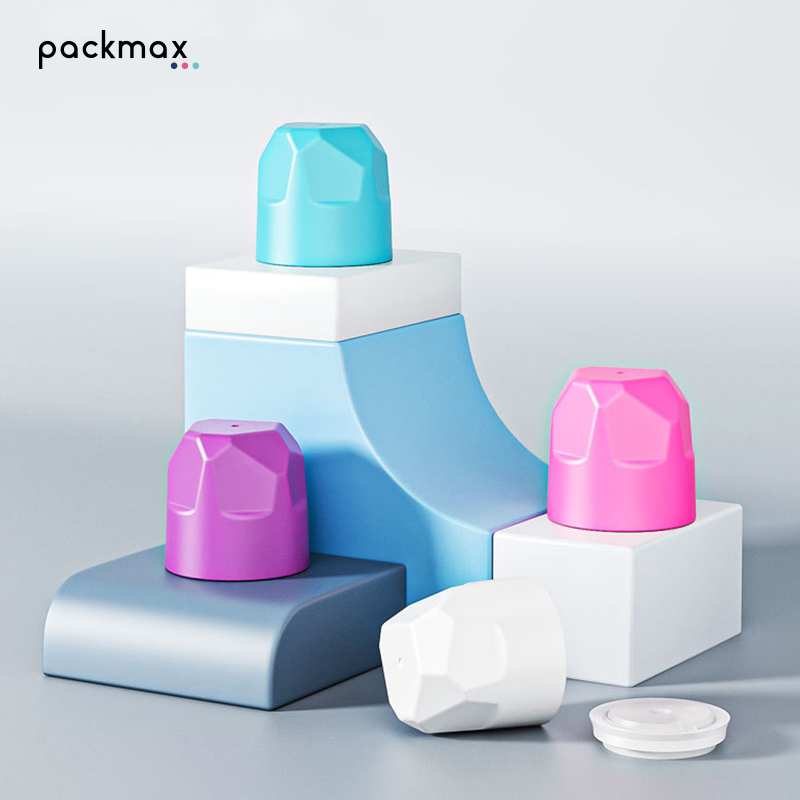
As the global beauty, skincare, and personal care market continues to evolve, packaging has transcended its role as a mere protective container. It now communicates a brand's material selection, design philosophy, and environmental responsibility directly to consumers.
While traditional plastic packaging predominantly relies on fossil-based feedstocks, an increasing number of brands are exploring alternative materials—such as sugarcane, wheat straw, bamboo fiber, and calcium carbonate—to partially replace conventional plastics or redesign packaging material structures.
However, the actual performance of these materials varies. Some reduce reliance on fossil resources, others enhance the utilization of agricultural by-products, and some improve specific environmental metrics by reducing polymer consumption.
Truly valuable sustainable packaging is not just about swapping materials; it is about finding a verifiable balance among product performance, cost, consumer experience, and environmental impact.
A Crucial Professional Distinction to Clarify First
| Material | Accurate Classification | Renewable? |
|---|---|---|
| Sugarcane-Based PE | Bio-based plastic | Yes |
| Wheat Straw Fiber | Agricultural by-product, bio-based filler | Yes |
| Bamboo & Wood Fiber | Plant fiber | Yes |
| Calcium Carbonate (CaCO3) | Mineral filler | No |
| PCR Plastic | Post-consumer recycled plastic | Classified as a recycled circular resource rather than a plant-based renewable material |
Calcium carbonate cannot be marketed as a "renewable material," but within appropriate formulations and product designs, it can reduce the environmental burden of materials by displacing a portion of fossil-based plastics.
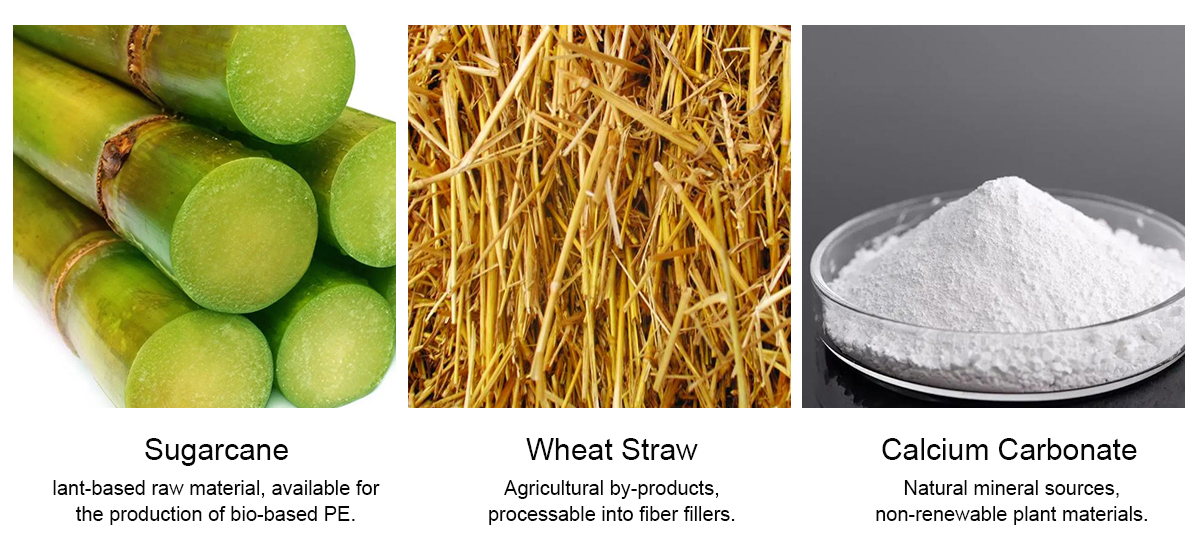
01 | Sugarcane-Based Plastics: Using Plant Resources to Produce Plastics with Traditional Performance
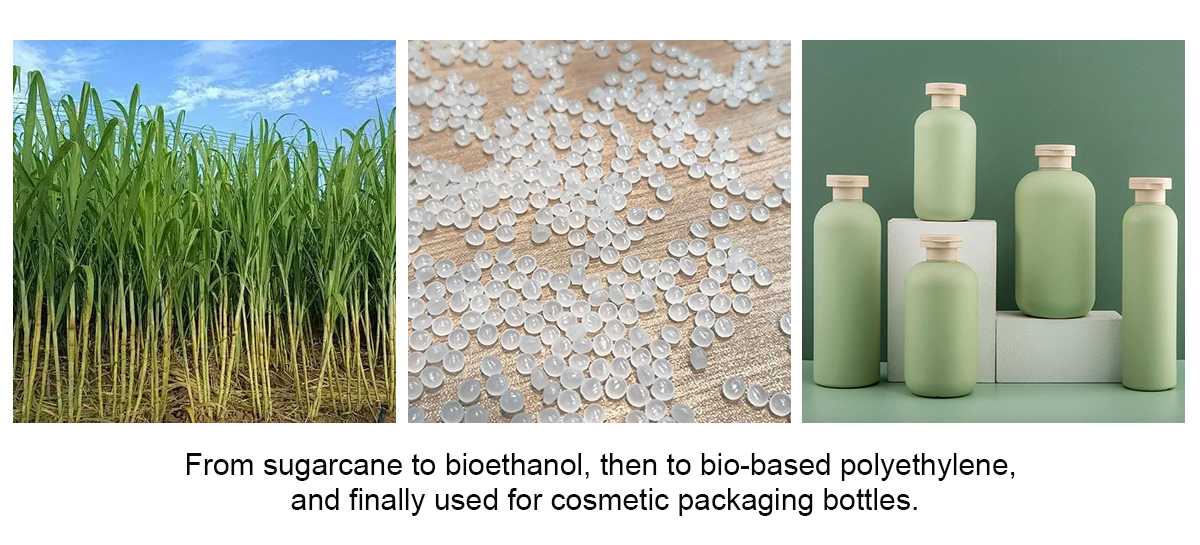
Sugarcane-based plastic stands as one of the more mature industrialization pathways in bio-based packaging.
Sugars extracted from sugarcane undergo fermentation to yield bio-ethanol, which is subsequently converted into ethylene to produce polyethylene (Bio-PE), utilized for bottles, tubes, and other packaging components.
Compared to conventional fossil-based PE, bio-PE shares identical chemical structures and comparable processing performance, enabling seamless integration into established packaging manufacturing technologies.
Its advantages include:
- Utilizing renewable plant-derived carbon to minimize dependence on fossil feedstocks.
- Suitability for HDPE bottles, select tubes, and caps.
- Identical chemical structure to conventional PE, allowing entry into existing PE recycling streams under appropriate collection systems and packaging designs.
- Potential reduction of lifecycle greenhouse gas emissions under qualified raw material sources and production processes.
Important Considerations:
Sugarcane-based PE is not synonymous with biodegradable plastic. Even though derived from sugarcane, standard bio-PE must not be casually discarded into natural environments. It is better suited for existing PE recycling streams rather than natural environmental decomposition.
Suitable Beauty Packaging Applications: Shampoo bottles, conditioner bottles, body lotion bottles, facial cleanser bottles, caps and closures, and select tubes.
02 | Wheat Straw Fiber: Transforming Agricultural By-Products into Packaging Resources
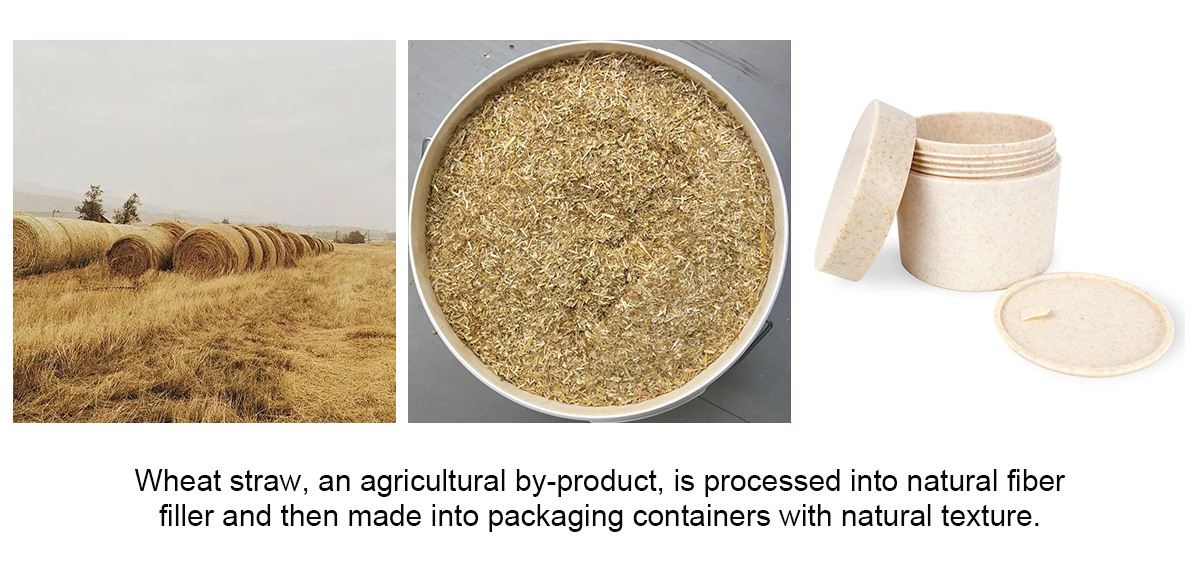
Wheat straw is an agricultural residue remaining after wheat harvest, rich in cellulose and other natural fiber components.
Following washing, drying, grinding, and surface treatment, wheat straw can be compounded with plastics like PP or PE to form wheat straw fiber-reinforced or filled plastic materials.
This material suits packaging designs emphasizing natural textures, often featuring a warm beige, light brown shade, or subtle organic speckling.
It offers the following potential advantages:
- Leveraging agricultural residual resources to reduce the consumption of virgin plastics.
- Creating unique natural textures and tactile sensations.
- Enhancing specific mechanical properties in optimized formulations.
- Providing brands with a traceable agricultural sourcing narrative.
Research Support
A study published in the Journal of Applied Polymer Science evaluated polypropylene (PP) composites containing 10%, 20%, 30%, 40%, and 50% wheat straw fiber, investigating the impact of fiber content on mechanical performance.
Another study published in Polymer Bulletin demonstrated that surface treatment of wheat straw fibers can improve the mechanical properties of wheat straw/PP composites, showing enhancements in tensile strength, flexural strength, and impact strength under testing conditions.
The Limitations of Wheat Straw Fiber Are Equally Important
Plant fibers are hydrophilic; increased loading levels can elevate moisture absorption, impacting dimensional stability, appearance, and moisture resistance. Consequently, components directly containing aqueous skincare and personal care formulas or interfacing with bulk contents typically require rigorous material compatibility and barrier testing.
Suitable Beauty Packaging Applications: Cream jar outer caps, soap dishes, compact powder cases, cosmetic gift box components, and decorative packaging parts.
03 | Calcium Carbonate: Not a Renewable Resource, but a Viable Plastic-Reduction Tool
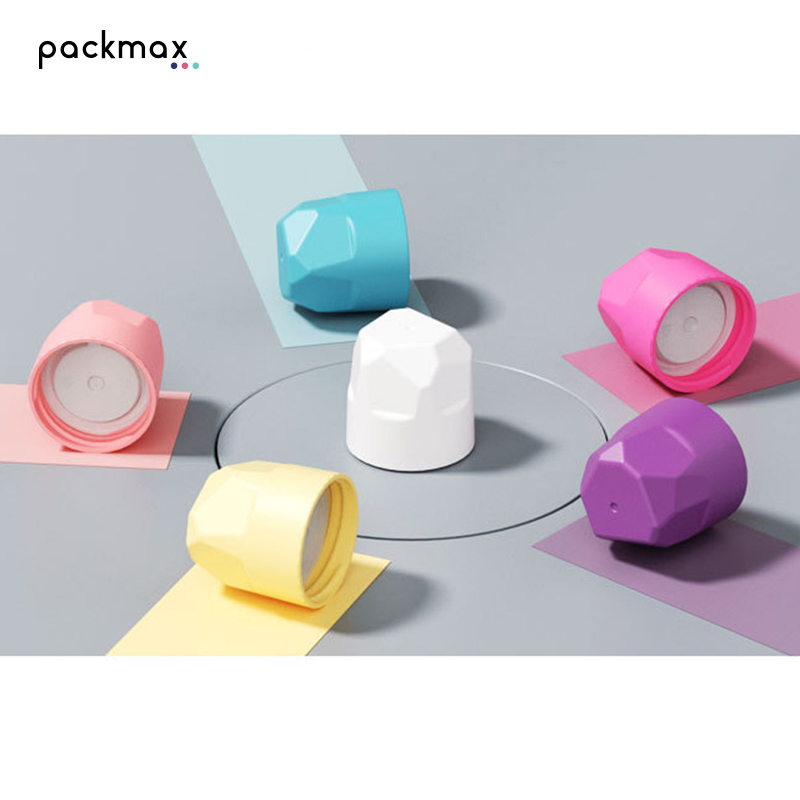
Calcium carbonate (CaCO3) is a ubiquitous natural mineral material acquired through the processing of limestone and other mineral ores.
Within plastic packaging, calcium carbonate is typically incorporated as a filler into polymers such as PP or PE.
Its core function is not converting plastics into bio-based alternatives, but partially replacing virgin polymers while tuning material performance and cost.
In appropriate material systems, it can deliver the following values:
- Reducing the mass proportion of fossil-based polymers within the formulation.
- Improving stiffness and dimensional stability in certain products.
- Imparting white, matte, or mineral-like tactile appearances.
- Lowering specific environmental impact indicators under targeted production processes and formulations.
Research Data
A 2024 study published in Research in Materials examined polypropylene composites containing varying levels of calcium carbonate. The findings revealed that a 40% calcium carbonate-filled PP formulation achieved:
- A reduction in fossil fuel resource depletion by approximately 32%
- An increase in Young's modulus by approximately 69%
However, the same study noted that yield strength decreased from 17.68 MPa for neat PP to 12.73 MPa for the 40% CaCO3-filled PP, demonstrating that enhanced rigidity does not necessarily equate to overall performance improvements across all indicators.
This highlights that sustainable material selection requires balancing multiple performance metrics rather than focusing on a single index.
Suitable Beauty Packaging Applications: Cream jars, outer caps, cosmetic shells, packaging emphasizing matte mineral textures, and rigid packaging parts.
04 | Bamboo and Wood Fibers: Beyond Natural Textures, Stability Must Be Considered
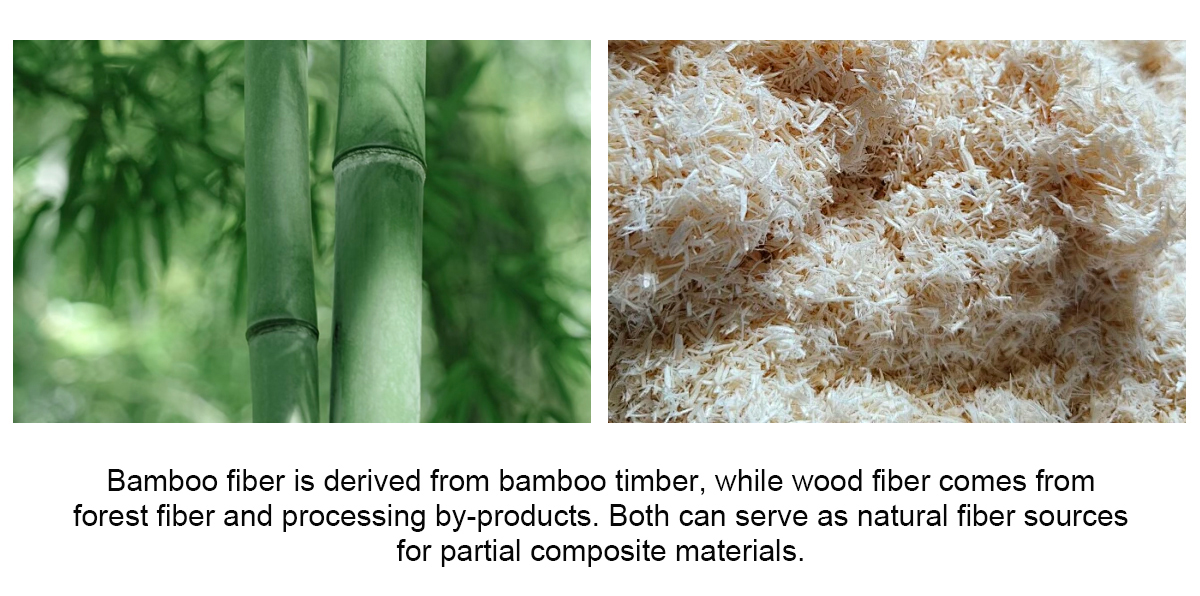
Bamboo Fiber: Sourced from bamboo plants, serving as a natural fiber source for composite materials.
Wood Fiber: Derived from forestry fibers and processing residues, requiring scrutiny regarding sustainable forestry credentials.
Bamboo and wood fibers can be integrated into packaging components via composite technologies to create natural particle textures or reduce reliance on pure fossil plastics.
However, brands must rigorously verify plant fiber origins, low-carbon performance, and recyclability independently; an eco-friendly origin does not automatically imply total packaging sustainability. Consequently, these materials are better described accurately as "plant fiber composite packaging" rather than vaguely advertised as "100% eco-friendly" or "naturally biodegradable."
05 | Why Are Brands Prioritizing These Materials?
Material innovation extends beyond environmental concerns, tying closely into product differentiation, brand storytelling, consumer awareness, and future regulations.
Consumer Attitudes Toward Sustainable Packaging
Consumer market research indicates that when purchasing packaged goods, individuals still prioritize food safety, shelf-life, quality, and price; among sustainability attributes, recyclability commands the highest attention.
Four Key Values for Brand Development
1. Establishing Differentiated Positioning
In the highly competitive skincare and personal care market, sugarcane-based plastics, agricultural fiber composites, and mineral-filled materials create distinct tactile expressions and visual languages.
2. Empowering Evidence-Based Sustainability Narratives
Brands can transparently communicate material origins, replaced traditional materials, exact ratios, and recycling methods to consumers, moving past superficial green-leaf imagery.
3. Preparing for Future Regulations and Procurement Requirements
The European Union Packaging and Packaging Waste Regulation (EU 2025/40, PPWR) will progressively tighten mandates on recyclability design, waste management, packaging reduction, labeling transparency, and recycled content in select plastic packaging.
4. Attracting Material-Innovation Partners
For cosmetic OEM/ODM manufacturers, international brands, and retailers, suppliers capable of providing material traceability, performance testing, lifecycle data, and concrete packaging solutions hold significantly higher partnership value than those with generic catalogs.
06 | Key Considerations When Selecting Alternative Materials
| Material | Potential Environmental Value | Packaging Advantages | Primary Limitations |
|---|---|---|---|
| Sugarcane-Based PE | Replaces fossil feedstocks, potentially lowers carbon emissions | Retains conventional PE processing performance | Cost, raw material certification, agricultural land use |
| Wheat Straw Fiber + PP | Utilizes agricultural by-products, reduces virgin plastic usage | Natural texture, material differentiation | Moisture absorption, color variation, barrier performance |
| Bamboo/Wood Fiber + PP | Utilizes biomass fibers | Natural tactile feel and appearance | Material sorting, moisture resistance, strength |
| Calcium Carbonate + PP | Partially replaces fossil polymers | Rigidity, whiteness, cost control | Weight, toughness, impact strength |
| PCR | Reduces virgin plastic demand, promotes PET/PP recycling | Suits mature packaging systems | Color variance, impurities, quality and regulatory compliance |
None of these materials should be directly advertised as "zero-carbon" or "most eco-friendly" absent product-level Life Cycle Assessments (LCAs).
07 | Future Packaging Innovation Is Not About Completely Abandoning Plastics

The next phase of sustainable packaging does not necessarily mean replacing traditional plastics entirely with a single novel material.
A more realistic direction involves strategically combining material origins, recycled content, lightweight design, and recyclable structures according to specific product functional requirements.
Examples include:
- Shampoo bottles exploring bio-based HDPE or compatible PCR HDPE.
- Cream jar outer caps evaluating wheat straw fiber or calcium carbonate-filled PP.
- High-end skincare packaging prioritizing refillable inner pods to cut down on repeated full-package manufacturing.
- Products requiring high airtightness and moisture barrier properties prioritizing sealing performance, formula compatibility, and product safety above all.
Materials are merely a starting point. Realizing true environmental advantages depends heavily on actual formulations, manufacturing processes, service life span, and end-of-life recycling pathways.
From material procurement, manufacturing, consumer usage, to waste management, only solutions capable of driving measurable improvements across the entire product lifecycle warrant true packaging innovation investment.